Corporate Governance
Role of the Board
The Board of Directors of Infratil is elected by the shareholders to supervise the management of Infratil. The day to day management responsibilities of the Infratil have been delegated to Morrison & Co Infrastructure Management Limited ("MCIM" and “the Manager”). The Board establishes Infratil's objectives, overall policy framework within which the business is conducted and confirms strategies for achieving these objectives. The Board also monitors performance and ensures that procedures are in place to provide effective internal financial control.
The Board’s Charter defines the respective roles of the Board and Management. The Board Charter reflects the sound base the Board has developed for providing strategic guidance for Infratil and the effective oversight of the Manager, and management of subsidiaries.
The Board is committed to undertaking its role in accordance with internationally accepted best practice within the context of Infratil’s business. The Board also takes account of Infratil’s listing on both the NZSX and ASX. Infratil’s corporate governance practices reflect and satisfy the NZX Corporate Governance Best practice Code (‘NZX Code’) and the ASX Corporate Governance Council’s Corporate Governance Principles and Recommendations (2nd Edition), (“ASX Principles”), other than in the following three areas:
- Infratil has not established separate Director Nomination and Remuneration Committees. The Board considers that it is properly dealing with Directors nominations and remuneration at the full Board level; and
- the majority of the Board is not independent, but comprises three independent directors and three non-independent directors as the Board considers all directors bring an independent judgement to bear on board decisions, has procedures for determining any related party interest, and has access to independent professional advice where this is required at Infratil’s expense; and
- The New Zealand Companies Act 1993 requires the disclosure of all remuneration payable over $100,000 per annum in $10,000 bands. As the company must comply with this obligation, it has chosen not to also make detailed disclosure of the remuneration of the five highest paid executives and the prescribed key management personnel information as is considered best practice under the ASX Principles.
The day to day management responsibilities of the Infratil have been delegated to the Manager of Infratil. Infratil’s constitution and each of the charters and policies referred to in this Corporate Governance section are available below.
Role of Management
All Board authority conferred on the Manager is delegated through the Chief Executive appointed by the Manager. The Board determines and agrees with the Manager specific goals and objectives, with a view to achieving the strategic goals of Infratil. Between Board meetings, the Chairman maintains an informal link between the Board and the Manager, and is kept informed by the Manager on all important matters. The Chairman is available to the Manager to provide counsel and advice where appropriate. Decisions of the Board are binding on the Manager. The Manager is accountable to the Board for the achievement of the strategic goals of Infratil. At each of its Board meetings, the Board receives reports from or through the Manager including financial, operational and other reports and proposals.
Board Membership
The number of Directors is determined by the Board, in accordance with the Infratil’s constitution, to ensure it is large enough to provide a range of knowledge, views and experience relevant to Infratil’s business. The Board considers that the roles of the Chairman and Chief Executive must be separate.
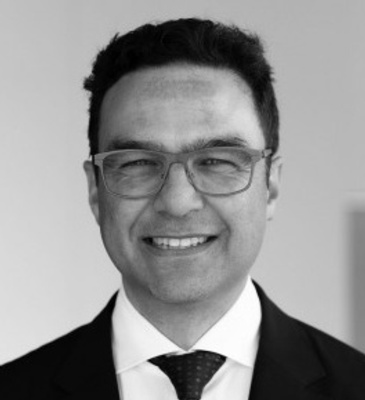
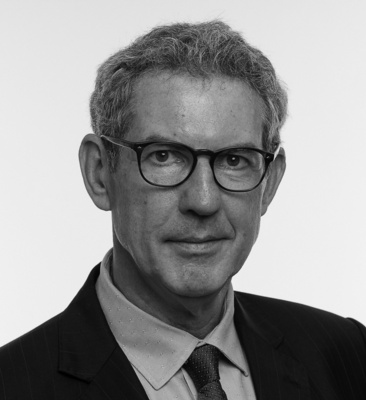
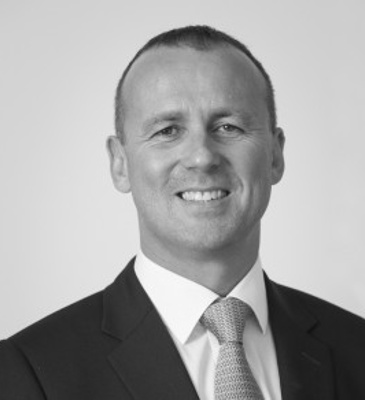
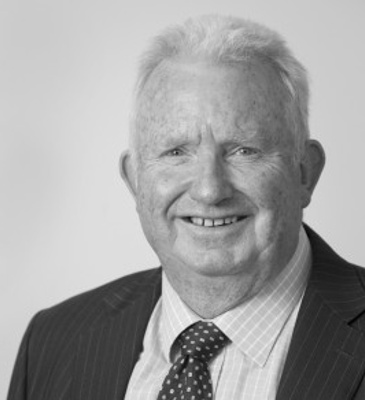
The Board currently comprises four non-executive Directors including the Chairman and two executive Directors, with three of these Directors’ independent Directors (including the Chairman) and three non-independent Directors. During the year under review the Board met eight times with a full agenda. The composition of the Board, experience and Board tenure are set out in the Board biographical information here. Mr Morrison, Mr Saville and Mr Bogoievski have interests in entities which are substantial shareholders in Infratil, and in MCIM which has a Management Agreement with Infratil.
In judging whether a Director is independent the Board has regard to the independence guidelines set out in the Board Charter, and the NZX and ASX Listing Rules. In accordance with those guidelines, immaterial dealings between a director and Infratil or its substantial shareholders would be ignored when determining whether or not they are independent (that is, dealings that could not reasonably be expected to influence him or her in making decisions as a director). Directors disclose all interests and any related party matters to the Board.
In accordance with the Infratil’s constitution one third, or the number nearest to one third, of the Directors (excluding any Director appointed since the previous annual meeting) retire by rotation at each annual meeting. The Directors to retire are those who have been longest in office since their last election. Directors retiring by rotation may, if eligible, stand for re-election.
The Board considers new Director nominations, the induction of Directors and succession planning for Directors. The skills and capabilities of the Board are continually assessed through the Chairman and the Board, including potential gaps in skills and experience. Infratil has not developed a Board skills matrix due to the relatively small size of the Board (six Directors) and the Directors being well known to each other. Potential candidates are identified through Infratil, and its Board’s extensive network of business associates. Nominations for Directors are also made to Infratil, either through the Chairman, an existing Director, or through an Infratil officer, and considered first by the Chairman, and then discussed with the Board. Open and frank conversations occur in the consideration of new Directors including who may be available and the skills and capabilities sought to add value to Infratil’s businesses and strategic objectives. The key factors taken into account in assessing new Directors is the ability to add value to Infratil’s investments through particular industry or sector, financial or commercial experience relevant to Infratil’s strategic intent. Professional intermediaries are generally not used to identify and assess candidates.
Nominations will be put to the Annual Meeting in accordance with Infratil’s constitution and the relevant legislation and listing rules. In selecting new Directors, the Board recognises the current skills and diversity of the existing Board, potential retirements of existing Board members, and the new skills a particular Director nominee may bring. The filling of casual vacancies must be approved by the Board and approved by shareholders at the next general meeting.
Directors Remuneration
The Board determines the level of remuneration paid to Directors within the amounts approved by Shareholders (that is,. from the approved collective pool). Non-executive and executive Directors are paid a basic fee as ordinary remuneration and are paid, as additional remuneration, an appropriate extra fee as Chairman of a Board Committee and an appropriate extra fee for any special service as a Director as approved by the Board. The Chairman is paid a level of fees appropriate to the office. Remuneration is reviewed annually by the Board and fees are reviewed against fee benchmarks in New Zealand and Australia and take into account the size and complexity of Infratil’s business. In addition, Board members are entitled to be reimbursed for costs directly associated with the performance of their role as Directors, including travel costs, and the Chairman approves all Directors expenses, and the Chief Executive or Company Secretary approves the Chairman’s expenses.
Directors' Shareholding
Under the constitution Directors are not required to hold shares in Infratil. However, $10,000 of the Directors fees for non-executive Directors other than Duncan Saville are paid through the issue of shares to those Directors. All Directors, either hold shares themselves or shares are held by organisations to which they are associated parties, in recognition of the benefits of aligning Directors' interests with those of shareholders. Directors will not normally make investments in listed infrastructure or utilities securities in areas targeted by Infratil.
Audit & Risk Committee
Audit and Risk Committee The Board has established an Audit and Risk Committee comprising of two independent Directors being Mr M Tume (Chairman of the Audit & Risk Committee) and Mr D A R Newman, and one non-independent Director, being Mr M Bogoievski, with attendances by appropriate MCIM representatives.
The qualifications of the members of the Audit and Risk Committee are shown in the “Our Directors” section of the 2011 Annual Report and here Directors.
Whilst the number of independent Directors on the Audit and Risk Committee is one less than recommended by the ASX Principles, the Board considers that this is practical given the relatively small size of the Board. In addition, the Board considers that the inclusion of an executive Director on the Audit and Risk Committee provides balance and additional valuable insights to its processes.
The function of the Audit and Risk Committee is to oversee financial reporting, accounting policies, financial management, internal control systems, risk management system, systems for protecting assets and compliance. The Committee keeps under review the scope and results of audit work, its cost effectiveness and performance, independence and objectivity of the auditors. It also reviews the financial statements and the announcement to the New Zealand Exchange and Australian Stock Exchange of financial results. The Audit and Risk Committee Charter is available below. During the year under review the Audit and Risk Committee met five times with a full agenda.
The Audit and Risk Committee receives regular reports from the Manager including reports on financial and business performance, risk management, financial derivatives exposures and accounting and internal control matters.
Internal Financial Control
The Board has overall responsibility for Infratil's system of internal financial control. The Directors have established procedures and policies that are designed to provide effective internal financial control. Annual budgets, forecasts and reports on the strategic direction of Infratil are prepared regularly and reviewed and agreed by the Board. Financial and business performance reports are prepared monthly and reviewed by the Board throughout the year to monitor performance against financial and non-financial targets and strategic objectives.
Financial statements are prepared monthly and reviewed by the Board throughout the year to monitor performance against budget targets and objectives.
Risk Management and Compliance
Risk Management and Compliance The Audit and Risk Committee also has a function of reviewing management practices in relation to identification and management of significant business risk areas and regulatory compliance. Formal systems have been introduced for regular reporting to the Board on business risk, including impacts and mitigation strategies and compliance matters.
The Manager (Infratil Chief Executive and Chief Financial Officer) is required to, and has confirmed to the Audit and Risk Committee and Board in writing that:
- financial records have been properly maintained and the company’s financial statements present a true and fair view, in all material respects, of the Company’s financial condition, and operating results are in accordance with relevant accounting standards;
- The financial statements have been prepared in accordance with New Zealand Generally Accepted Accounting Practice (GAAP) and comply with International Financial Reporting Standards (IFRS) and other applicable financial reporting standards for profit-oriented entities; and
- That appropriate and effective internal controls and risk management practices are in place to safeguard and protect Infratil’s assets and to identify, assess, monitor and manage risk, and identify material changes to Infratil’s risk profile.
Directors' and Officers' Insurance
Infratil has arranged Directors' and officers' liability insurance covering Directors acting on behalf of Infratil. Cover is for damages, judgements, fines, penalties, legal costs, awarded and defence costs arising from wrongful acts committed while acting for Infratil. The types of acts that are not covered are dishonest, fraudulent, malicious acts, or omissions, wilful breach of statute or regulations, or duty to Infratil, improper use of information to the detriment of Infratil or breach of professional duty.
Independent Professional Advice
With the approval of the Chairman, Directors are entitled to seek independent professional advice on any aspect of the Directors' duties, at Infratil's expense.
Going Concern
After reviewing the current results and detailed forecasts, taking into account available credit facilities and making further enquires as considered appropriate, the Directors are satisfied that Infratil has adequate resources to enable it to continue in business for the foreseeable future. For this reason, the Directors believe it is appropriate to adopt the going concern basis in preparing the financial statements.
Board Performance
The Board as a whole and individual Directors are subject to a performance appraisal from time to time using a corporate governance best practice model. The Chairman also initiates a review with each Director and a collective review of Board performance. Appropriate strategies for personal and collective improvement are then agreed and actioned. Reviews have been undertaken consistent with the process described above.
Disclosure and Shareholder and Other Stakeholder Communications
Infratil is committed to promoting investor confidence by providing forthright, timely, accurate, complete and equal access to information, and to providing comprehensive continuous disclosure to shareholders and other stakeholders, in compliance with the NZSX/NZDX and ASX Listing Rules. All shareholder communications and market releases are subject to review by the Manager (including Chief Executive, Chief Financial Officer and Legal counsel), and information is only released after proper review and reasonable inquiry. Full year and half year results releases are also approved by the Audit and Risk Committee and the Board.
Infratil aims to communicate effectively, give ready access to balanced and understandable information about Infratil and corporate proposals and make it easy to participate in general meetings. Infratil seeks to ensure its shareholders are appropriately informed on its operations and results, with the delivery of timely and focused communication, and the holding of shareholder meetings in a manner conducive to achieving shareholder participation. To ensure shareholders and other stakeholders have access to relevant information Infratil:holds regular investor road shows, and sends to interested parties the dates and invitations to attend;
- sends shareholders and bond holders its annual and half year review which is a summary of Infratil’s operating and financial performance for the relevant period;
- ensures its website contains media releases, full year and half year financial information, current and past annual reports, dividend histories, notices of meeting, details of Directors and The Manager, a list of shareholders' frequently asked questions and other information about Infratil;
- makes available printed half year and annual reports and encourages shareholders to access these documents on the website and to receive advice of their availability by email;
- publishes press releases on issues/events that may have material information content that could impact on the price of its traded securities and sends email updates to interested stakeholders ;
- Webcasts its half year and full year results so that a wide group of interested parties can review and participate in discussions on performance, and advises interested parties of the dates and how to participate in the webcast; and
- provides additional explanatory memoranda where circumstances require, such as explanations of dividend changes and other explanatory memoranda as may be required by law.
Shareholder meetings are generally held in a location and at a time which is intended to maximise participation by shareholders. Meetings are typically alternated between Wellington and Auckland. Full participation of shareholders at the annual meeting is encouraged to ensure a high level of accountability and identification with Infratil’s strategies and goals. Shareholders have the opportunity to submit questions prior to each meeting and the Manager, senior management of subsidiary companies and auditors are present to assist in and provide answers to questions raised by shareholders. There is also an opportunity for informal discussion with Directors, the Manager and senior management for a period after the meeting concludes.
Infratil supports the efforts of the New Zealand Shareholders’ Association (NZSA) to raise the quality of relations between public companies and their shareholders. Shareholders wishing to learn more about the NZSA can find information on the association's website (http://www.nzshareholders.co.nz). While Infratil supports the general aims and objectives of the NZSA, its specific actions and views are not necessarily endorsed by Infratil, or representative of Infratil's view.
Share Trading Policy
Infratil has a share trading policy applicable to Directors, the Manager, officers and all employees, which can be found on Infratil’s website. The policy includes a fundamental prohibition on insider trading and obligations of confidentiality when dealing with material information. The policy applies to ordinary shares and debt securities issued by Infratil.
Code of Ethics
Infratil has always required the highest standards of honesty and integrity from its Directors, Manager and employees. This commitment is reflected in Infratil’s ethics policy and code of conduct, which can be found on Infratil’s website. The ethics policy and code of conduct recognises Infratil’s legal and other obligations to all legitimate stakeholders. The policy applies to Directors, the Manager and all employees.
The policy sets the ethical and behavioural standards and professional conduct for which Directors, the Manager and employees of Infratil and its subsidiaries (Infratil People) are expected to conduct their work life. Failure to follow the standards provided in this Code will result in the appropriate staff or other performance management practices being invoked and may lead to disciplinary action including dismissal.
Remuneration
Infratil’s senior management (excluding staff of MCIM as the Manager) are remunerated with a mix of:
- Base salary and benefits;
- Short term performance incentives; and
- Long term performance incentives.
The determination of fixed remuneration is based on responsibilities, individual performance and experience, and market data. At-risk/variable remuneration comprises short term incentives and, for senior and key employees, long-term incentives. Infratil’s executives are employed by subsidiary companies, and executive remuneration policies are determined and approved by the subsidiary company boards within high level principles established by the Infratil Board. Incentives are directly related to the performance area controlled by the executive, while longer term incentives are intended to align with shareholder interests. Remuneration of executives of subsidiary companies is overseen by non-executive directors of those subsidiary companies.
Performance reviews of executive are carried out regularly and at least annually, and involve feedback by the Board on executive performance of the Manager, and subsidiary Directors’ review of subsidiary company’s Chief Executive and executive’s performance. Performance reviews include the setting of goals and objectives set at the beginning of the year, and reviewing the achievement of those goals and objectives at the end of the year. Performance measures will normally include both qualitative and quantitative measures. Performance evaluations have taken place in accordance with this process during the reporting year.
Short Term Incentives
In the Infratil Group, variable remuneration recognizes and rewards high-performing individuals whose contribution supports business goals and objectives, and who meet their individual goals agreed with the Board or their Chief executive (as appropriate).
Short term incentives (STIs) comprise cash payments based on performance measured against key performance indicators (KPIs). Different levels of incentives are determined reflecting the nature of the roles in Infratil. KPIs may comprise entity or individual business, team and individual targets. These targets are designed to create goals that will support an achievement and performance-oriented culture. The STI programme is designed to differentiate reward for exceptional, outstanding and good performance.
Long Term Incentives
The principal objective of long term incentives is to align executives’ performance with shareholder interests and provide equity-based incentives that help retain valuable employees. Long term incentive arrangements vary within Infratil depending on circumstances and jurisdiction, and include both cash payments based on performance and value add over a period (generally three years), or rights to participate in the Infratil Executive Scheme, which is outlined in the Financial Statements. In determining the allocation of shares under the Executive Share Scheme, the Infratil Board considers individual participants’ performance in the preceding financial year and potential in future years. Currently participation in the LTI Scheme is limited to around 20 senior and key employees of Infratil. These employees are approved by the Infratil Board after consideration of a recommendation from subsidiary boards. TrustPower, an Infratil NZX listed non-wholly owned subsidiary, has issued share options to certain employees as part of its long term incentives. The details of this scheme are disclosed in TrustPower’s 2011 Annual Report.
MCIM Management Fees
As noted earlier, Infratil is managed by MCIM, under a Management Agreement. The Management Agreement sets out the terms of the services provided by the Manager and the basis of fees, including base fees and incentive fees. Details of fees paid to the Manager are fully disclosed in the 2012 Annual Report financial statements, including:
- Note 32 – components of the Management Fee;
- Note 31 – related party disclosures in respect of MCIM and fees paid to MCIM; and
- in the statutory information section, the interests of Directors associated with MCIM, and Director’s fees.

Go to top
Print Page
Smaller